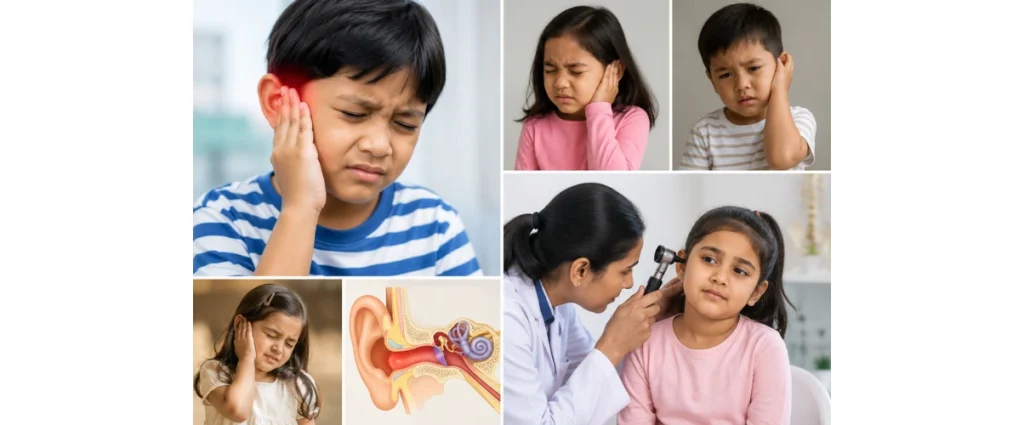
An ear infection in children happens when fluid builds up behind the eardrum, often following a cold, and becomes infected or inflamed, causing pain and temporary hearing changes. Ear infections are very common in young children because of how their ears are structured, and most resolve with time or simple supportive care. However, persistent, severe, or frequently recurring infections may need evaluation by a pediatric ENT in Jayanagar, since repeated infections can sometimes affect hearing and, in turn, speech and language development if left unaddressed. This article walks through why ear infections happen, what to watch for, how they’re treated, and when it’s time to see a specialist.
What Is an Ear Infection in Children?
A pediatric ear infection most often refers to a middle-ear infection (otitis media), where fluid collects behind the eardrum and becomes infected or inflamed. This is different from an outer-ear infection (otitis externa), which affects the ear canal itself and is often linked to water exposure or irritation.
Children are more prone to middle-ear infections than adults because their Eustachian tubes — the small channels connecting the middle ear to the back of the nose — are shorter, narrower, and more horizontally positioned. This makes it easier for fluid and germs from the nose and throat to travel into the middle ear, especially during or after a cold.
Some ear infections resolve on their own with supportive care as the body clears the fluid and inflammation, while others — particularly those with more significant bacterial involvement — may need medical treatment. Determining which situation applies to a specific child usually requires an ear examination rather than guesswork based on symptoms alone.
What Causes Ear Infections in Children?
Several factors commonly contribute to pediatric ear infection episodes:
- Viral respiratory infections, including the common cold
- Bacterial infections following or alongside a cold
- Nasal congestion that affects Eustachian tube function
- Eustachian tube dysfunction, which is especially common in young children due to their anatomy
- Allergies contributing to nasal and Eustachian tube swelling
- Enlarged adenoids blocking normal drainage
- Exposure to cigarette smoke
- Attending daycare, where frequent exposure to respiratory infections is common
- Bottle-feeding while lying completely flat, which can allow fluid to enter the Eustachian tube
- Age-related anatomical differences that make Eustachian tube drainage less efficient in young children
There’s a direct connection here: a cold causes nasal congestion, congestion affects how well the Eustachian tube drains, and poor drainage allows fluid to accumulate in the middle ear — creating an environment where infection can develop. Not every case that follows this pathway requires antibiotics; many resolve as the underlying congestion clears.
What Are the Symptoms of an Ear Infection in Children?
Common symptoms include:
- Ear pain
- Pulling or tugging at the ear
- Increased irritability
- Difficulty sleeping
- Fever
- Reduced appetite
- Fluid or discharge from the ear
- Reduced response to sounds
- Temporary hearing difficulty
- Balance problems in some children
- Increased crying in infants
- Difficulty concentrating or responding to instructions
Symptoms can look quite different depending on a child’s age — older children can usually describe ear pain directly, while infants and toddlers often show changes in behavior instead.
How Can Parents Recognise an Ear Infection in Babies and Toddlers?
In younger children, signs can be less obvious and may include:
- Increased fussiness for no clear reason
- Poor or disrupted sleep
- Feeding difficulties, especially with sucking or swallowing
- Pulling or tugging at one or both ears
- Crying more than usual, particularly when lying down
- Fever
- Reduced response to sounds or voices
It’s worth noting that ear pulling alone does not always mean an ear infection — babies sometimes tug at their ears out of curiosity, teething discomfort, or habit. Combined with other symptoms like fever or irritability, though, it’s a reasonable reason to have the ear checked.
Can Ear Infections Cause Hearing Loss in Children?
Yes, ear infections can cause temporary hearing loss in children, primarily due to fluid accumulating behind the eardrum, which reduces how well sound vibrations pass through to the inner ear. This type of hearing reduction is usually temporary and improves once the fluid clears.
However, when fluid persists for a long time or infections happen repeatedly, hearing can be affected for extended periods. If this goes unrecognised during important stages of early development, it can potentially interfere with speech, language, and learning, since children rely heavily on clear hearing to pick up spoken language. This is why hearing evaluation is often recommended when a child has recurrent infections, persistent fluid, or any parental concern about hearing — not because every ear infection causes lasting harm, but because catching a genuine problem early is easier to manage.
What Are Recurrent Ear Infections in Children?
Recurrent ear infections in children generally refers to a pattern of multiple infections occurring within a defined period — for example, several infections within six months or a year. This pattern deserves medical evaluation because repeated infections can sometimes point to an underlying contributing factor rather than simple bad luck.
Possible contributing factors include:
- Ongoing Eustachian tube dysfunction
- Enlarged adenoids affecting drainage
- Underlying allergies
- Persistent fluid that never fully clears between infections
- Frequent exposure to respiratory infections through daycare or siblings
Doctors may monitor a child’s hearing more closely when infections recur frequently, since persistent fluid can accumulate silently between acute episodes. Additional ENT evaluation may be considered based on the child’s age, symptom pattern, frequency of infections, and hearing status — surgery is not an automatic recommendation and is only one of several possible paths depending on individual findings.
What Is the Treatment for Ear Infections in Children?
Ear infection treatment for children depends on the type and severity of the infection, and there isn’t a single approach that fits every case.
Common management strategies include:
- Observation or watchful waiting in selected mild cases, since many infections improve without antibiotics
- Pain and fever management as advised by a healthcare professional
- Antibiotics when a bacterial infection is suspected or clinically indicated
- Treatment of contributing nasal congestion or allergy issues where relevant
- Follow-up assessment if symptoms don’t improve as expected
- Hearing evaluation when hearing concerns are present alongside the infection
It’s important that parents do not start antibiotics on their own or reuse leftover prescriptions — the decision to use antibiotics should always follow a proper examination, since many ear infections are viral or resolve without them. Any medication, including pain relief, should be given according to a doctor’s guidance for the child’s specific age and weight.
When Should Parents Take Their Child to an ENT?
Consider consulting a child ENT specialist in Jayanagar if your child has:
- Frequent or recurrent ear infections
- Persistent ear pain that doesn’t settle
- Ear discharge
- Fever that persists longer than expected
- Suspected hearing difficulty
- Delayed speech or language development
- A child not responding normally to sounds or their name being called
- Fluid in the middle ear that doesn’t clear over time
- Balance-related concerns
- Symptoms that don’t improve with initial treatment
- Concerns about repeated or frequent antibiotic use
An ENT doctor for children can examine the ear directly, assess whether fluid is present, and determine whether further evaluation, such as a hearing test, is appropriate — rather than parents having to guess based on symptoms alone.
When Is an Ear Infection an Emergency?
While most ear infections are not emergencies, certain symptoms need prompt medical attention:
- Severe or rapidly worsening pain
- Significant swelling or redness behind the ear
- Bleeding from the ear
- Severe dizziness or balance problems
- Marked lethargy or unusual difficulty waking the child
- Severe headache accompanied by other concerning symptoms
- High or persistent fever, particularly in very young infants
- Sudden, significant hearing changes
- A child who appears seriously unwell overall
These are distinct from the typical, more routine symptoms of an uncomplicated ear infection, and recognising the difference helps parents know when to seek urgent care versus a routine appointment.
How Does an ENT Diagnose an Ear Infection in a Child?
Diagnosis typically involves:
- A detailed history of symptoms, their duration, and any recent illnesses
- Examination of the ear canal and eardrum using an otoscope
- Assessment of the eardrum’s appearance, including redness, bulging, or perforation
- Checking for fluid behind the eardrum
- Hearing evaluation where appropriate
- Tympanometry, a test that measures how the eardrum moves, when clinically useful
- Other investigations in selected cases, based on the child’s specific presentation
Parents should be aware that it isn’t always possible to tell from symptoms alone whether an infection is viral or bacterial — a proper ear examination is generally needed to guide the right treatment decision.
Does My Child Need a Hearing Test After an Ear Infection?
A hearing test may be recommended in certain situations rather than after every single infection. Consider children hearing test Jayanagar evaluation when there is:
- Persistent hearing difficulty noticed by parents or caregivers
- A pattern of repeated ear infections
- Fluid in the middle ear that doesn’t clear over an extended period
- Concerns about speech or language development
- A child who seems to respond poorly to sounds or spoken instructions
- Concerns raised by parents, teachers, or other caregivers
The specific type of hearing test used depends on the child’s age and ability to participate — younger children often require different testing approaches than school-age children who can follow verbal instructions during testing.
How Can Parents Reduce the Risk of Ear Infections?
While no measure can completely prevent ear infections, some practical steps may help reduce their frequency:
- Keeping vaccinations up to date, as recommended by your pediatrician
- Avoiding exposure to cigarette smoke
- Practising good hand hygiene to reduce the spread of respiratory infections
- Managing diagnosed allergies appropriately
- Breastfeeding where possible and appropriate, as advised by your pediatrician
- Avoiding bottle-feeding in a completely flat position
- Reducing exposure to respiratory infections where practical, such as during outbreaks at daycare
- Following medical advice closely for children with a history of recurrent ear problems
These measures may lower the likelihood of infections for some children but cannot guarantee that ear infections will not occur.
Pediatric ENT and Hearing Care in Jayanagar, Bengaluru
Parents in Jayanagar and surrounding parts of Bengaluru dealing with a child’s persistent ear infections, ongoing hearing concerns, repeated ear discharge, or speech-related worries may find it helpful to seek a pediatric ENT in Jayanagar evaluation rather than continuing to manage symptoms without a clear diagnosis. Dr. Rohit Udaya Prasad, at Dr Rohit’s Centre for ENT & Cochlear Implant in 7th Block, Jayanagar, provides ENT evaluation services for children, including assessment of recurrent ear infections and hearing-related concerns, alongside the clinic’s broader ENT and hearing-care focus.
A Word for Parents
If your child has persistent, recurrent, or concerning ear symptoms, consider arranging a consultation with Dr. Rohit Udaya Prasad at Dr Rohit’s Centre for ENT & Cochlear Implant for a thorough ear examination and appropriate guidance. Every child’s situation is different, and any treatment recommendation will depend on your child’s specific examination findings and history — there’s no substitute for having a professional actually look at your child’s ear.
Frequently Asked Questions
- What are the first signs of an ear infection in a child?
Early signs often include ear pain, tugging at the ear, irritability, poor sleep, and sometimes fever. In infants, increased fussiness and feeding difficulty may appear before the child can indicate pain directly, making behavior changes an important clue for parents. - How can I tell if my child has an ear infection?
Look for ear pain, ear pulling, fever, irritability, or reduced response to sounds, especially following a cold. Since symptoms can overlap with other conditions, an ENT or pediatrician examination using an otoscope is the reliable way to confirm an ear infection. - Do all children with ear infections need antibiotics?
No. Many ear infections, particularly mild or viral ones, improve with observation and supportive care alone. Antibiotics are used when a bacterial infection is suspected or clinically indicated, and this decision should always be made by a healthcare professional after examination. - Can an ear infection cause hearing loss in children?
Yes, temporary hearing loss in children can occur due to fluid behind the eardrum during an infection, and it usually resolves once the fluid clears. Persistent or repeated infections affecting hearing for longer periods may need further evaluation. - When should I take my child to an ENT doctor?
Consider an ENT evaluation if your child has frequent or recurrent infections, persistent ear pain or discharge, suspected hearing difficulty, delayed speech, or symptoms that don’t improve with initial treatment. A child ENT specialist in Jayanagar can assess the underlying cause directly. - What can parents do at home for ear infection symptoms?
Parents can offer comfort measures and manage pain or fever as advised by their pediatrician, while avoiding unapproved medications or home remedies inserted into the ear. Any concerning or persistent symptoms should be evaluated by a doctor rather than managed purely at home. - Why does my child keep getting ear infections? Recurrent ear infections in children?
can result from ongoing Eustachian tube dysfunction, enlarged adenoids, allergies, or frequent exposure to respiratory infections through daycare or siblings. An ENT evaluation can help identify contributing factors specific to your child. - Does my child need a hearing test after repeated ear infections?
A hearing test may be recommended if infections are frequent, fluid persists, or there are concerns about speech, language, or response to sounds. Your doctor can advise whether a children hearing test Jayanagar evaluation is appropriate based on your child’s history. - When should parents worry about an ear infection?
Seek prompt medical attention for severe or worsening pain, swelling behind the ear, ear bleeding, high or persistent fever, marked lethargy, or sudden hearing changes. These signs go beyond typical ear infection symptoms and need timely evaluation. - Can recurrent ear infections affect speech and language development?
Persistent fluid or repeated infections can cause prolonged temporary hearing reduction, which may interfere with speech and language development if it goes unrecognised for an extended period. This is why hearing evaluation is often recommended for children with recurrent ear infections.