+(01) 1987 123456
12th street, LA
Reach out to our ENT specialists for expert care in hearing, breathing, and voice-related concerns.
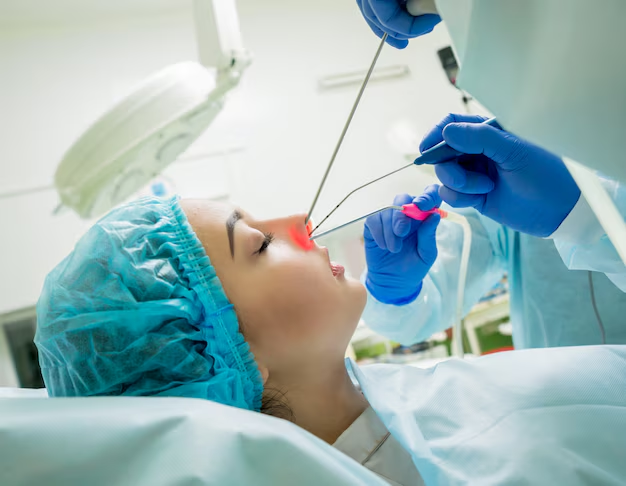
Nasal endoscopy is a diagnostic procedure that allows ENT specialists to examine the inside of the nasal passages and sinuses using a thin, flexible or rigid tube with a camera and light source. It provides a detailed view of structures that cannot be seen during a routine examination, helping in the diagnosis of nasal blockages, infections, growths, or structural problems. The procedure is safe, quick, and minimally invasive, often performed in a clinic setting.
Doctors may recommend nasal endoscopy for patients experiencing:
Persistent nasal congestion or blockage.
Recurrent or chronic sinus infections.
Frequent nosebleeds.
Loss of smell or taste.
Suspicion of nasal polyps or tumors.
Headaches or facial pain linked to sinus issues.
Evaluation before or after sinus surgery.
During the procedure:
The patient is seated comfortably in the examination chair.
A local anesthetic spray or decongestant is applied to reduce discomfort and swelling.
The endoscope is gently inserted into the nostril to examine nasal passages, septum, turbinates, and sinus openings.
Images from the camera are displayed on a screen for clear visualization.
The entire process typically takes 5–10 minutes and is generally well tolerated.
This procedure is suitable for:
Adults and children with chronic or unexplained nasal and sinus symptoms.
Patients requiring detailed evaluation of nasal structure before surgery.
Individuals with suspected nasal growths or polyps.
Those with unexplained headaches, drainage, or persistent nasal obstruction.
Accurate Diagnosis: Provides a clear and detailed view of nasal and sinus structures.
Minimally Invasive: Performed in an outpatient setting without cuts or stitches.
Quick Procedure: Takes only a few minutes with minimal discomfort.
Guides Treatment: Helps doctors plan medical or surgical interventions effectively.
Early Detection: Identifies growths, infections, or structural issues before they worsen.
Nasal endoscopy does not usually require recovery time. Patients can resume normal activities immediately after the procedure. Mild nasal irritation or watering may occur for a short period but typically resolves quickly. If a biopsy or minor procedure is performed during endoscopy, additional care instructions will be provided by the doctor.
Nasal endoscopy is an essential tool in modern ENT care, offering accurate diagnosis and guidance for treatment with minimal discomfort. Whether for evaluating sinus problems, detecting growths, or planning surgery, it provides patients with clarity and confidence in their healthcare. Choosing nasal endoscopy ensures a safe, effective, and detailed examination for better management of nasal and sinus conditions.
Nasal endoscopy is a quick, in-clinic procedure that lets ENT specialists directly examine the nasal passages and sinus openings using a thin camera-equipped scope. At Dr Rohit’s Centre for ENT & Cochlear Implant in Jayanagar, Bangalore, we use nasal endoscopy to accurately diagnose chronic congestion, sinus infections, nasal polyps, and unexplained loss of smell — conditions that a routine physical exam often misses. The procedure takes just 5-10 minutes, requires no downtime, and provides the clarity needed to plan the right treatment. Patients across Jayanagar and Bangalore trust this minimally invasive test for fast, precise nasal and sinus diagnosis.
Nasal endoscopy is generally well tolerated and not painful. A local anesthetic spray or decongestant is applied before the procedure to reduce discomfort. Most patients experience only mild pressure or a tickling sensation during the examination.
An ENT specialist may recommend nasal endoscopy to evaluate persistent nasal congestion, recurrent sinus infections, frequent nosebleeds, loss of smell, suspected nasal polyps, facial pain, or other nasal and sinus conditions. It provides a detailed view that a routine nasal examination cannot.
The procedure usually takes between 5 and 10 minutes and is performed in an outpatient clinic. There is no downtime, and most patients can return to their normal activities immediately afterward.
Dr. Rohit's Centre for ENT & Cochlear Implant in Jayanagar 7th Block, Bangalore, offers same-day nasal endoscopy for the accurate diagnosis and management of nasal and sinus disorders.
Nasal endoscopy can detect nasal polyps, chronic sinus infections, a deviated septum, tumors, structural blockages, inflammation, and causes of reduced sense of smell. It allows the ENT specialist to directly examine areas that cannot be seen during a standard nasal examination.
Very little preparation is required. You can usually eat and drink normally before the appointment. Your doctor will apply a local anesthetic spray or decongestant immediately before the procedure to improve comfort, and the entire visit generally takes less than 30 minutes.
No. Nasal endoscopy provides a live, direct view of the nasal passages and sinus openings, while a CT scan creates detailed images of the bones and deeper sinus structures. Both tests are often used together to achieve an accurate diagnosis.
Yes. Nasal endoscopy can be safely performed in children when medically necessary using smaller, flexible scopes and gentle techniques. It is commonly used to investigate chronic nasal blockage, recurrent infections, adenoid enlargement, or other pediatric ENT conditions.