+(01) 1987 123456
12th street, LA
Reach out to our ENT specialists for expert care in hearing, breathing, and voice-related concerns.
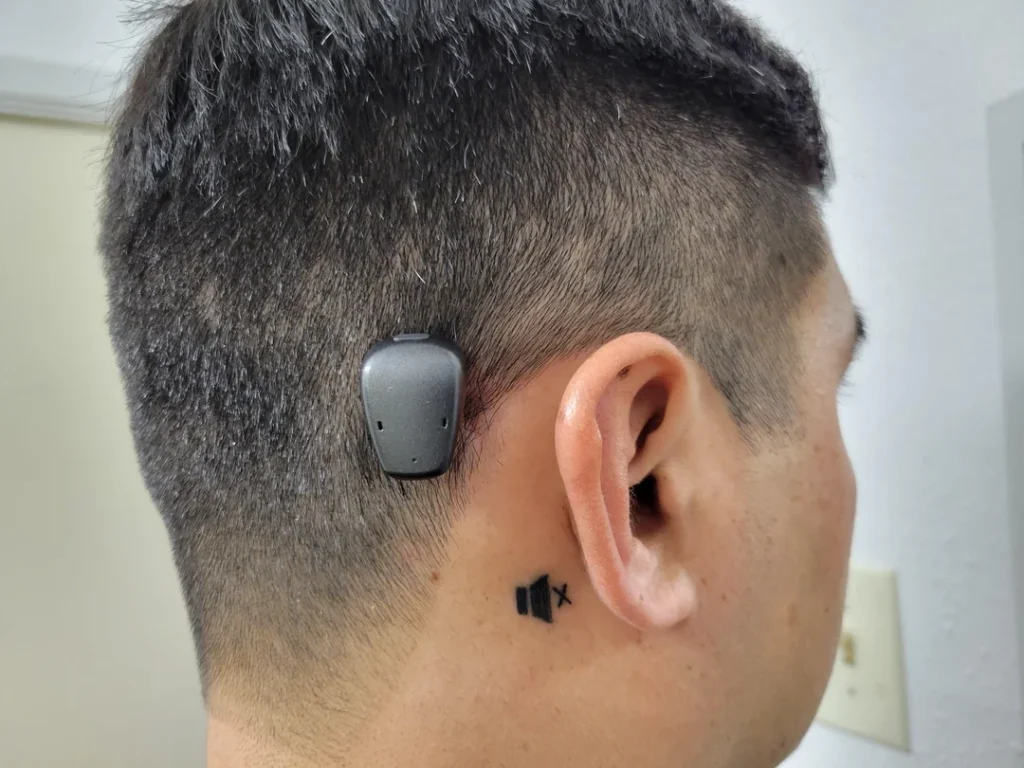
Bone Conduction Implants (BCI) are an advanced hearing solution designed for individuals who cannot benefit fully from conventional hearing aids. Unlike traditional devices that amplify sound through the ear canal, bone conduction implants work by transmitting sound vibrations directly through the skull bone to the inner ear. This innovative approach bypasses the damaged outer or middle ear, allowing patients with specific hearing conditions to experience clear and natural sound.
For individuals with conductive hearing loss, mixed hearing loss, single-sided deafness, or congenital ear canal abnormalities, conventional hearing aids may not be an option. Bone conduction implants — including BAHA (Bone Anchored Hearing Aid) and the Adhear non-surgical system — offer a precise, effective alternative by transmitting sound directly through the skull bone to the functioning inner ear. At Dr. Rohit’s Centre for ENT & Cochlear Implant in 7th Block, Jayanagar, Bangalore, bone conduction implant candidacy is assessed through comprehensive audiological and imaging evaluation. Both surgical and non-surgical options are discussed with every patient before a treatment pathway is chosen. Expert care, close to home, right here in Jayanagar.
Bone conduction technology relies on the natural ability of bones to carry sound waves. A small implant is surgically placed in the bone behind the ear, which picks up sound signals from an external sound processor. These signals are then converted into vibrations that are transmitted directly to the inner ear (cochlea). Since the outer and middle ear are bypassed, patients with chronic ear infections, congenital malformations, or conductive hearing loss can hear effectively without relying on the ear canal.
Bone conduction implants are highly effective for patients who:
Have conductive or mixed hearing loss where the problem lies in the outer or middle ear.
Experience single-sided deafness (SSD) and require sound to be transmitted from the non-hearing side to the functioning inner ear.
Suffer from chronic ear infections or ear canal problems that prevent the use of regular hearing aids.
Have congenital conditions such as atresia or microtia, where the ear canal is absent or malformed.
Improved Sound Quality: Provides clear, direct transmission of sound without distortion.
Bypasses Blockages: Especially useful for patients with damaged or non-functional ear canals.
Comfortable Use: Eliminates the discomfort of traditional hearing aids that sit in or around the ear canal.
Better Localization of Sound: Helps patients with single-sided hearing loss regain directional awareness of sound.
Long-Term Relief: Offers a stable and reliable solution for patients with chronic ear conditions.
The surgical procedure for bone conduction implants is minimally invasive and typically performed under local or general anesthesia. A small titanium implant is placed behind the ear, which integrates with the bone over time through a process called osseointegration. Once healed, the external sound processor is attached, and the patient can immediately begin experiencing improved hearing. Recovery is usually quick, and patients are guided with follow-up care to ensure optimal results.
Bone conduction implants provide a life-changing solution for individuals who have struggled with hearing difficulties due to structural or medical ear problems. By delivering sound directly to the inner ear, these implants offer clarity, comfort, and long-term effectiveness. With proper evaluation, skilled surgical care, and advanced technology, patients can enjoy a significant improvement in their hearing ability and overall quality of life.
Experience advanced Bone Conduction Implant in Bangalore at Dr Rohit’s Centre For ENT & Cochlear Implant, where expert ENT specialists provide cutting-edge hearing solutions for patients with hearing loss. Our clinic ensures precise diagnosis, personalized care, and successful implant outcomes, helping you regain natural hearing and improved quality of life with trusted medical excellence.
Bone conduction implants are recommended for people with conductive hearing loss caused by chronic ear infections or ear canal abnormalities, mixed hearing loss with preserved inner ear function, single-sided deafness, and congenital aural atresia. At Dr. Rohit's Centre for ENT & Cochlear Implant in Jayanagar, Bangalore, candidacy is assessed through hearing tests, bone conduction evaluation, and imaging studies.
BAHA (Bone Anchored Hearing Aid) is a surgically implanted hearing system that uses a titanium implant behind the ear. Adhear is a non-surgical adhesive bone conduction device worn on the skin without an implant. Bonebridge is an active bone conduction implant placed completely under the skin with a small external processor. Dr. Rohit's ENT clinic helps determine the most suitable option based on your hearing condition and lifestyle.
Yes. Children who are too young for surgical implantation can use bone conduction devices on a softband, allowing them to hear during critical speech and language development. At Dr. Rohit's Centre in Jayanagar, Bangalore, bone conduction device fitting and assessment are available for children of all ages.
A BAHA is designed for people with conductive or mixed hearing loss who have a healthy inner ear but cannot use conventional hearing aids. It transmits sound vibrations directly through the skull to the cochlea. A cochlear implant is intended for people with severe inner ear damage and works by directly stimulating the auditory nerve. An ENT specialist will recommend the appropriate device after a detailed hearing assessment.
Dr. Rohit's Centre for ENT & Cochlear Implant in 7th Block, Jayanagar, Bangalore provides comprehensive evaluation and surgical placement of BAHA, Bonebridge, and Adhear bone conduction systems for both adults and children. To schedule an appointment, call +91 9900206167.
A bone conduction implant captures sound through an external processor and converts it into vibrations that travel through the skull bone directly to the inner ear, bypassing problems in the outer or middle ear. This technology helps improve hearing for people with conductive hearing loss or single-sided deafness.
Yes. BAHA surgery is a well-established, minimally invasive procedure that usually takes less than one hour and may be performed under local or general anaesthesia. Most patients return home the same day. Mild swelling or soreness resolves within a few days, while the implant fully integrates with the bone over one to three months before the sound processor is fitted.
Yes. Many patients can trial a bone conduction device using a softband or adhesive adapter before surgery. This allows you to experience the expected hearing improvement before making a decision. Trial fittings are especially useful for children and first-time users considering a permanent implant.