CALL US NOW :

+(01) 1987 123456

MAILING ADDRESS :

[email protected]

LOCATION ADDRESS :

12th street, LA

Bone Conduction Implant Surgery – Pediatric

Pediatric bone conduction implant surgery in Jayanagar Bangalore
Bone Conduction Implant Surgery – Pediatric

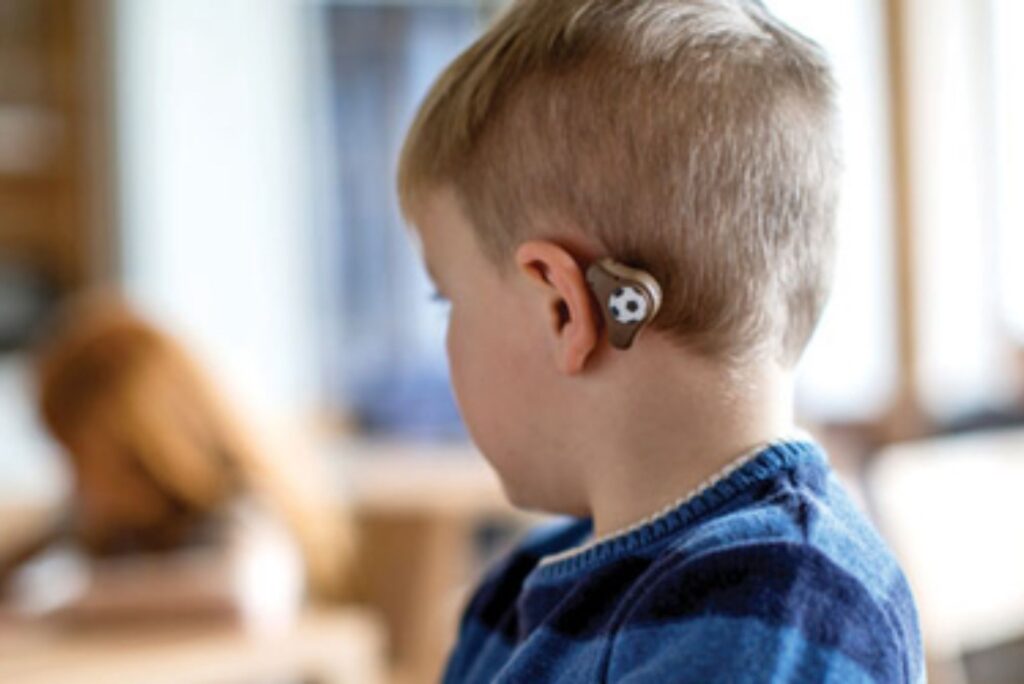
Bone conduction implant (BCI) surgery for children is an advanced hearing solution designed for kids who cannot benefit fully from conventional hearing aids. Instead of amplifying sound through the ear canal, these implants transmit sound vibrations directly through the skull bone to the inner ear (cochlea). This approach bypasses the damaged outer or middle ear, giving children with specific hearing conditions the ability to hear more clearly, communicate better, and develop speech and language skills.

When is Pediatric Bone Conduction Implant Surgery Recommended?

This surgery may be advised for children who:

  • Have conductive or mixed hearing loss due to outer or middle ear problems.

  • Suffer from chronic ear infections or drainage that prevents hearing aid use.

  • Have congenital conditions such as atresia or microtia, where the ear canal is absent or malformed.

  • Experience single-sided deafness (SSD) and need sound transmitted from the non-hearing ear to the hearing side.

  • Cannot tolerate or benefit from regular hearing aids.

How the Procedure Works

The procedure is performed under general anesthesia:

  • A small titanium implant is placed in the bone behind the ear.

  • Over time, the implant fuses with the bone through osseointegration.

  • An external sound processor is later attached, which picks up sound and converts it into vibrations.

  • These vibrations are transmitted directly to the inner ear, bypassing the outer and middle ear.

Who Can Benefit from Pediatric Bone Conduction Implants?

This treatment is especially suitable for:

  • Children with permanent conductive or mixed hearing loss.

  • Kids who cannot wear traditional hearing aids due to ear canal problems.

  • Children with congenital ear malformations needing alternative hearing solutions.

  • Young patients with SSD requiring improved sound localization and awareness.

Advantages of Pediatric Bone Conduction Implant Surgery
  • Clearer Hearing: Provides natural and direct sound transmission.

  • Bypasses Damaged Pathways: Ideal for children with outer or middle ear issues.

  • Comfortable & Child-Friendly: Avoids discomfort of traditional hearing aids.

  • Supports Speech & Language Development: Improves communication and learning.

  • Long-Term Solution: Reliable, stable hearing improvement with modern implant technology.

The Procedure and Recovery

Surgery typically takes 1–2 hours, and most children can return home the same day or after an overnight stay. Recovery is quick, with mild discomfort around the implant site. The external sound processor is fitted after the surgical site has healed, usually within a few weeks. Children will need regular follow-up and hearing rehabilitation to maximize outcomes.

Why Choose This Treatment?

Pediatric bone conduction implant surgery offers a life-changing opportunity for children with hearing difficulties that cannot be managed by standard hearing aids. By delivering sound directly to the inner ear, it ensures clearer hearing, better communication, and improved learning. With skilled surgical care and advanced implant technology, children can achieve long-term hearing improvement, leading to greater independence, confidence, and overall development.

Pediatric bone conduction implant surgery in Jayanagar Bangalore

Dr. Rohit’s Centre for ENT & Cochlear Implant provides pediatric bone conduction implant evaluation and surgical care in Jayanagar, Bangalore. Children with selected conductive or mixed hearing loss, congenital ear abnormalities or conditions affecting the outer or middle ear may be evaluated for bone conduction hearing solutions based on their individual hearing and medical assessment.
Frequently Asked Questions

A bone conduction implant is a hearing technology that transmits sound vibrations through the skull bone to the functioning inner ear. It can be considered for selected children who have conductive or mixed hearing loss and cannot obtain sufficient benefit from conventional hearing aids because of outer or middle ear problems.

Children with selected conductive or mixed hearing loss, congenital abnormalities of the outer or middle ear, or certain conditions affecting conventional hearing-aid use may be considered. Candidacy depends on hearing levels, inner-ear function, age, anatomy and other clinical factors assessed by an ENT and hearing team.

Yes, some young children may use non-surgical bone conduction devices, such as softband systems, depending on their hearing condition and age. These can provide access to sound while the child is being evaluated for longer-term hearing options. An ENT and audiology team can recommend suitable solutions.

A cochlear implant is generally designed for selected severe sensorineural hearing loss and directly stimulates the auditory nerve through an electrode in the cochlea. A bone conduction system bypasses the outer and middle ear by transmitting vibrations through bone to the inner ear. Candidacy differs for each technology.

No. Bone conduction implants are intended for selected types of hearing loss and specific anatomical or clinical situations. A detailed hearing evaluation and medical examination are needed before recommending implantation. The ENT specialist and audiology team consider the child's hearing, anatomy, age and expected benefit.

Evaluation may include detailed hearing tests, examination of the ear and hearing pathway, assessment of previous hearing-aid use and imaging when clinically indicated. For children, developmental and communication considerations may also be important. The exact evaluation is customised according to the child's hearing condition.

Dr. Rohit’s Centre for ENT & Cochlear Implant in 7th Block, Jayanagar, Bangalore provides evaluation and treatment planning for bone conduction hearing solutions. The clinic assesses the child's hearing condition and discusses surgical and non-surgical options according to individual clinical requirements.