+(01) 1987 123456
12th street, LA
Reach out to our ENT specialists for expert care in hearing, breathing, and voice-related concerns.
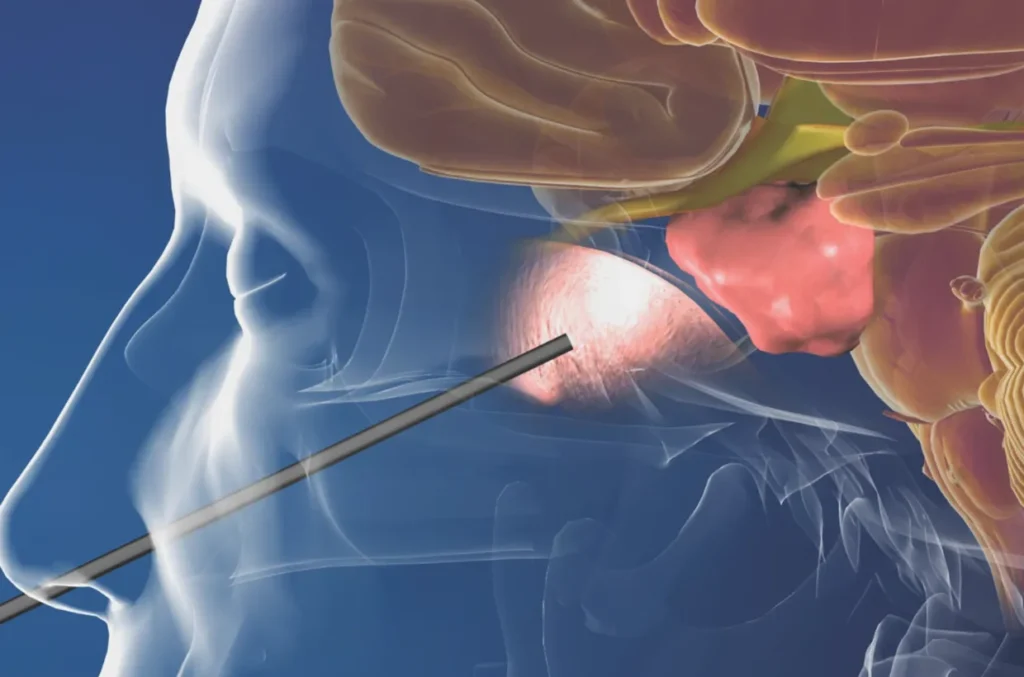
Anterior skull base surgery is a highly specialized surgical procedure performed to treat tumors, growths, or abnormalities located in the front portion of the skull base, which lies behind the eyes and nose. This region contains critical structures such as the brain, cranial nerves, and blood vessels, making surgery in this area delicate and complex. Advances in microsurgical and endoscopic techniques have made it possible to access and treat these conditions safely while minimizing damage to surrounding tissues.
This surgery may be recommended for patients with:
Benign or malignant tumors such as meningiomas, esthesioneuroblastomas, and pituitary tumors.
Cerebrospinal fluid (CSF) leaks from the skull base.
Congenital defects involving the cranial base.
Traumatic injuries affecting the anterior skull base.
Invasive sinus or nasal tumors extending to the skull base.
Anterior skull base surgery can be performed using two main approaches:
Open Surgery: A craniotomy (surgical opening of the skull) allows direct access to the tumor or defect.
Endoscopic Endonasal Surgery (EES): A minimally invasive technique using an endoscope inserted through the nose to access the skull base without external incisions.
The choice of approach depends on the location, size, and type of the lesion. Surgeons often work in a multidisciplinary team including ENT specialists and neurosurgeons to ensure safe and effective outcomes.
This surgery is suitable for patients who:
Have tumors or lesions compressing critical nerves, brain tissue, or blood vessels.
Experience persistent CSF leaks leading to recurrent infections.
Suffer from vision problems, nasal obstruction, or neurological symptoms caused by skull base growths.
Require correction of traumatic or congenital defects at the anterior skull base.
Effective Tumor Removal: Provides access to hard-to-reach tumors.
Symptom Relief: Improves vision, nasal breathing, and neurological function.
Minimally Invasive Options: Endoscopic approaches reduce scarring and recovery time.
Prevents Complications: Seals CSF leaks and prevents life-threatening infections.
Multidisciplinary Expertise: Combines ENT and neurosurgical skills for optimal results.
The surgery is performed under general anesthesia and may take several hours depending on the complexity. Endoscopic procedures often allow faster recovery, while open surgeries may require a longer hospital stay. After surgery, patients are closely monitored for complications such as infection, bleeding, or neurological changes. Recovery involves rest, wound care, and follow-up imaging to ensure successful treatment. Full recovery can take weeks to months depending on the approach and patient’s health.
Anterior skull base surgery offers hope and effective solutions for patients with complex conditions involving this critical region. With modern microsurgical and endoscopic techniques, surgeons can remove tumors, repair defects, and restore function while minimizing risk. Choosing expert care ensures safe outcomes, improved quality of life, and relief from symptoms caused by skull base conditions.
Anterior skull base surgery treats complex conditions at the junction of the nose, sinuses, and brain — including pituitary tumours, sinonasal cancers, and cerebrospinal fluid (CSF) leaks — using minimally invasive endoscopic techniques through the nasal passages instead of open surgery. At Dr Rohit’s Centre for ENT & Cochlear Implant in Jayanagar, Bangalore, we assess skull base conditions with detailed imaging and endoscopic evaluation, coordinating with neurosurgical colleagues where needed for the safest, least invasive approach. Patients from Jayanagar, JP Nagar, and across Bangalore benefit from endoscopic access that typically means faster recovery and no external facial incisions.
Anterior skull base surgery treats pituitary tumours, sinonasal and skull base tumours, cerebrospinal fluid (CSF) leaks, and other lesions located at the junction of the nasal cavity, sinuses, and the base of the brain. Most procedures are performed using advanced endoscopic techniques through the nostrils without external incisions.
Endoscopic skull base surgery is a minimally invasive approach that avoids facial or scalp incisions and generally offers less pain, reduced scarring, and faster recovery than traditional open surgery. However, the most appropriate approach depends on the tumour's size, location, and complexity.
Common symptoms include persistent clear, watery fluid leaking from one nostril, especially when bending forward, a salty or metallic taste, headaches, and sometimes recurrent meningitis. Diagnosis is confirmed using nasal endoscopy, imaging, and specialised laboratory testing.
Yes. Many anterior skull base procedures are performed jointly by an ENT skull base surgeon and a neurosurgeon, particularly when tumours are close to important brain structures. This collaborative approach ensures both safe tumour removal and optimal patient outcomes.
Endoscopic skull base surgery is a minimally invasive technique that allows surgeons to access tumours and skull base defects through the nose using a thin endoscope and specialised instruments. It is commonly used for pituitary tumour removal and CSF leak repair without external cuts.
A CSF leak can occur after head injury, previous sinus or skull base surgery, or sometimes due to increased pressure around the brain. It is diagnosed through nasal endoscopy and laboratory testing, and persistent leaks usually require surgical repair to prevent infection.
Yes. Most pituitary tumours are removed through the nose using endoscopic transnasal surgery. This minimally invasive technique avoids opening the skull and is performed jointly by an ENT skull base surgeon and a neurosurgeon, allowing faster recovery with minimal scarring.
Recovery after endoscopic anterior skull base surgery is usually shorter than after traditional open surgery. Initial healing generally takes one to a few weeks, although recovery varies depending on the underlying condition, tumour size, and whether a CSF leak repair was performed. Your surgical team will provide a personalised recovery plan.