
+(01) 1987 123456
12th street, LA

Reach out to our ENT specialists for expert care in hearing, breathing, and voice-related concerns.
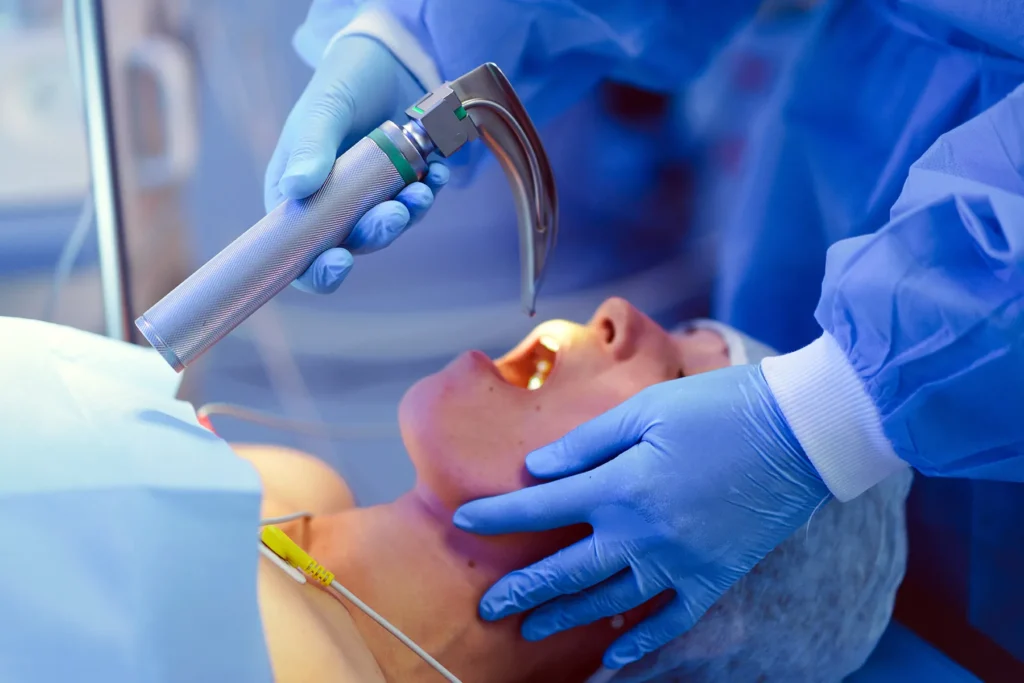
A laryngeal biopsy combined with laryngoscopy is a diagnostic procedure used to examine the voice box (larynx) and collect tissue samples if abnormalities are detected. The larynx plays a vital role in breathing, speaking, and swallowing, and conditions affecting it can cause hoarseness, voice changes, or difficulty swallowing. This procedure helps identify infections, growths, or cancers in the larynx, ensuring timely and accurate treatment.
Doctors may recommend this procedure for patients with:
Persistent hoarseness or voice changes lasting more than 2–3 weeks.
Suspicious growths, nodules, or lesions seen during routine ENT examination.
Difficulty breathing, swallowing, or chronic throat pain.
Coughing up blood or unexplained throat irritation.
Suspected laryngeal cancer, papillomas, or chronic laryngitis.
The procedure typically involves two steps:
Laryngoscopy: An endoscope (flexible or rigid) is passed through the nose or mouth to provide a clear view of the larynx. This helps detect lesions, swelling, or abnormal tissue.
Biopsy: If abnormalities are found, a small tissue sample is collected for laboratory analysis to confirm diagnosis.
The procedure is usually performed under local or general anesthesia depending on the case.
This evaluation is suitable for:
Patients with long-standing unexplained voice problems.
Individuals with suspected laryngeal growths, cysts, or tumors.
Those with high-risk factors such as smoking, alcohol use, or occupational voice strain.
Patients requiring accurate diagnosis before starting cancer or lesion treatment.
Accurate Diagnosis: Detects infections, benign growths, or cancer.
Minimally Invasive: Performed with endoscopic technology, avoiding external cuts.
Guides Treatment: Helps specialists decide the best therapy, from medication to surgery.
Early Detection: Identifies conditions before they progress to advanced stages.
Improved Voice and Airway Care: Ensures timely management for better functional outcomes.
Laryngoscopy with biopsy usually takes 30–60 minutes. Patients may go home the same day unless further treatment is required. Mild sore throat, hoarseness, or coughing is common for a few days. Voice rest, hydration, and avoiding irritants like smoking are advised. Biopsy results are usually available within a week and guide the next stage of treatment.
Laryngeal biopsy and laryngoscopy provide an essential diagnostic pathway for patients with unexplained voice, throat, or airway problems. With advanced endoscopic tools and expert care, these procedures ensure accurate detection, early treatment, and improved long-term outcomes. Choosing this evaluation helps protect voice quality, airway health, and overall well-being.
A laryngoscopy lets your ENT specialist directly examine the voice box and surrounding structures, often the essential first step in understanding persistent hoarseness, throat pain, or swallowing difficulty. When a suspicious area is found, a laryngeal biopsy allows a small tissue sample to be tested, giving a definitive diagnosis rather than guesswork. At Dr Rohit’s Centre for ENT & Cochlear Implant in Jayanagar, Bangalore, both flexible and direct microlaryngoscopy are available, performed with patient comfort and diagnostic precision in mind, so you get clear answers quickly and can move confidently to the right treatment plan.
Flexible laryngoscopy uses a thin, flexible scope passed through the nose in an outpatient setting with minimal discomfort. Direct laryngoscopy is performed under general anesthesia in the operating room, allowing the ENT surgeon to perform biopsies or remove suspicious lesions when required.
No. A laryngeal biopsy is a diagnostic procedure used to determine the exact nature of a lesion. Many biopsied growths are benign, and a biopsy is the most reliable way to confirm the diagnosis before planning treatment.
Flexible laryngoscopy usually causes only mild, temporary discomfort, with a topical numbing spray used for comfort. Direct laryngoscopy with biopsy is performed under general anesthesia, so you won't feel pain during the procedure.
Pathology results are generally available within 5–10 working days. Your ENT specialist will explain the findings and discuss the appropriate treatment plan during your follow-up appointment.
Laryngoscopy allows doctors to examine the throat and voice box to diagnose hoarseness, chronic cough, swallowing difficulties, breathing problems, or suspicious growths. It may also be used to remove foreign bodies or obtain tissue samples for biopsy.
A laryngeal biopsy is generally considered a routine, low-risk diagnostic procedure. It is recommended whenever a suspicious lesion is detected to accurately identify the tissue and guide the most appropriate treatment.
Flexible laryngoscopy usually requires no special preparation. For direct laryngoscopy under general anesthesia, you'll typically need to fast for several hours beforehand and may undergo routine pre-operative blood tests as advised by your ENT specialist.
After a laryngeal biopsy, mild throat soreness and temporary voice changes are common for a few days. Voice rest is usually recommended, and your ENT specialist will review the biopsy results with you within one to two weeks.