+(01) 1987 123456
12th street, LA
Reach out to our ENT specialists for expert care in hearing, breathing, and voice-related concerns.
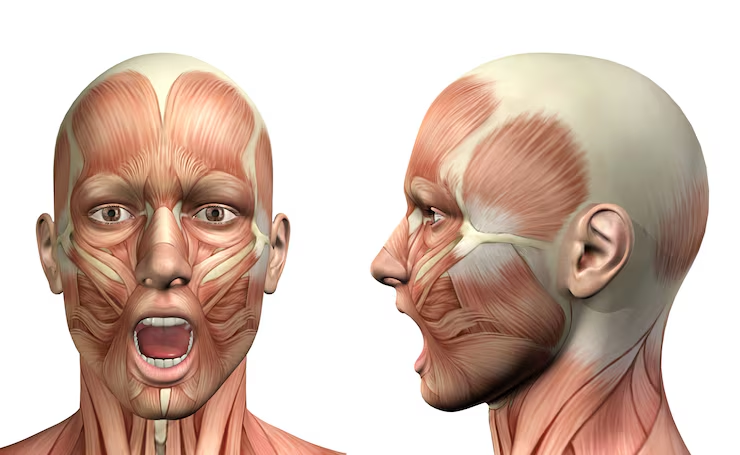
Surgery of the facial nerve is a specialized procedure performed to repair, reconstruct, or decompress the facial nerve when it is damaged or compressed. The facial nerve is responsible for controlling facial movements, expressions, and certain functions like tear and saliva production. Damage to this nerve can result from trauma, infections, tumors, or congenital conditions, leading to weakness or paralysis of facial muscles. Facial nerve surgery helps restore function, improve appearance, and enhance quality of life.
This procedure may be recommended for patients with:
Facial Nerve Tumors: Such as schwannomas or parotid gland tumors involving the nerve.
Trauma: Fractures or injuries affecting the temporal bone or nerve pathway.
Bell’s Palsy Complications: In rare cases where recovery does not occur.
Congenital Facial Nerve Palsy: Present from birth and affecting facial function.
Iatrogenic Injury: Accidental damage during ear or parotid surgery.
Compression or Scarring: From infections or chronic inflammation.
Depending on the condition, different surgical approaches may be used:
Facial Nerve Decompression: Relieves pressure on the nerve caused by swelling or trauma.
Nerve Grafting: Uses donor nerves to bridge gaps when the nerve is severely damaged.
Nerve Repair (Neurorrhaphy): Directly reconnects severed nerve ends.
Muscle or Nerve Transfer: Redirects other muscles or nerves to restore facial movement in long-standing paralysis.
Tumor Resection with Nerve Preservation: Removes tumors while safeguarding nerve function.
This surgery is suitable for:
Patients with persistent or complete facial paralysis.
Individuals with tumors involving or compressing the facial nerve.
Trauma patients with nerve damage due to fractures or injuries.
Children with congenital nerve defects affecting facial expression.
Those requiring reconstructive surgery for long-standing paralysis.
Restores Facial Movement: Improves ability to smile, blink, and express emotions.
Protects Eye Health: Reduces risk of corneal damage by restoring eyelid closure.
Improves Speech & Eating: Enhances oral competence and articulation.
Cosmetic & Emotional Benefits: Restores symmetry and boosts self-confidence.
Comprehensive Solutions: Options available for both recent injuries and chronic paralysis.
Facial nerve surgery is performed under general anesthesia. The surgical approach depends on the site and extent of nerve damage. Recovery varies from weeks to months, depending on the procedure and nerve healing rate. Rehabilitation with physiotherapy and facial exercises is often required to retrain muscles and optimize results. Regular follow-up ensures nerve regeneration and functional improvement.
Facial nerve surgery provides life-changing benefits for patients with paralysis or nerve damage. By restoring movement, function, and appearance, it improves both physical and emotional well-being. With modern microsurgical techniques and multidisciplinary care, facial nerve surgery offers safe, effective, and lasting results for patients seeking recovery from facial weakness or paralysis.
Sudden facial drooping, an inability to close one eye, or lasting facial weakness after an ear infection or injury can point to facial nerve damage requiring specialist evaluation. At Dr Rohit’s Centre for ENT & Cochlear Implant in Jayanagar, Bangalore, we assess facial nerve disorders — from Bell’s palsy and traumatic nerve injury to tumour-related compression — using nerve function testing and imaging to guide treatment. Depending on severity and cause, care ranges from medical management to facial nerve decompression or repair surgery, helping patients from Jayanagar, JP Nagar, and Bangalore regain facial movement, symmetry, and confidence.
Common causes include Bell's palsy (often viral-related), ear infections spreading to the nerve, head or ear trauma, surgical injury, and tumours pressing on the facial nerve. An ENT evaluation with nerve testing helps identify the exact cause and determine the most appropriate treatment.
No. Most Bell's palsy cases improve with early treatment using steroids and, in some cases, antiviral medication. Surgery, such as facial nerve decompression or nerve repair, is considered for traumatic injuries, tumour-related compression, or paralysis that fails to improve with medical treatment.
Very urgent. Sudden facial weakness should be evaluated immediately to rule out stroke, which is a medical emergency. If Bell's palsy or another facial nerve disorder is diagnosed, starting treatment within the first 72 hours offers the best chance of recovery.
Dr. Rohit's Centre for ENT & Cochlear Implant in 7th Block, Jayanagar, provides comprehensive facial nerve assessment and surgical treatment for patients from Jayanagar, JP Nagar, and across Bangalore using advanced nerve function testing and personalized care.
Sudden facial drooping may be caused by Bell's palsy or, more seriously, a stroke. If facial weakness occurs along with slurred speech, arm weakness, or confusion, seek emergency medical care immediately. Isolated facial weakness should still be assessed urgently by an ENT specialist.
Most people with Bell's palsy recover significant or complete facial movement within three to six months, especially when steroid treatment begins within a few days of symptom onset. Treatment may also include eye protection, physiotherapy, and rarely surgery.
Facial nerve decompression surgery relieves pressure on the facial nerve within the temporal bone. It is usually performed for severe traumatic facial paralysis or selected cases where nerve testing indicates that surgical decompression may improve long-term nerve function.
Recovery depends on the underlying condition and the type of surgery performed. Nerve healing is gradual, and noticeable improvement may take several months to over a year. Your ENT surgeon will explain the expected recovery timeline based on your individual condition and procedure.