+(01) 1987 123456
12th street, LA
Reach out to our ENT specialists for expert care in hearing, breathing, and voice-related concerns.
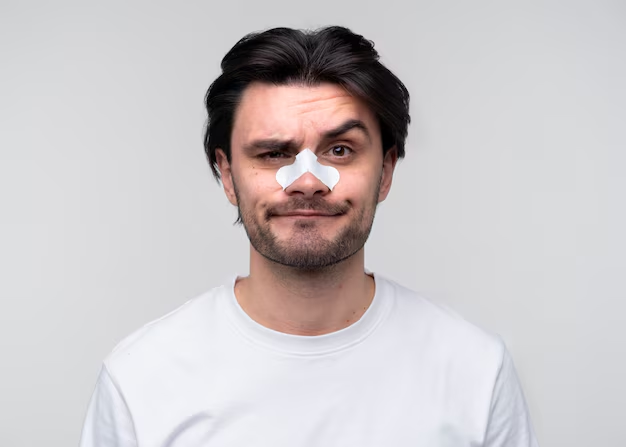
Fracture nasal bone correction is a surgical or non-surgical procedure used to realign and repair a broken nose. The nasal bones are the most commonly fractured facial bones due to their prominent position. Injuries may occur from accidents, falls, sports activities, or physical trauma. A nasal fracture not only alters appearance but can also cause breathing difficulties and long-term complications if left untreated. Correction ensures proper function, restores shape, and prevents chronic nasal issues.
Common reasons for nasal bone fractures include:
Road traffic accidents or falls.
Sports-related injuries (contact sports, boxing, football).
Physical altercations or trauma to the face.
Accidental impact during daily activities.
Patients may experience:
Pain and tenderness around the nose.
Swelling and bruising, especially around the eyes.
Crooked or deformed nose shape.
Nosebleeds (epistaxis).
Difficulty breathing due to obstruction.
Crunching sound or movement when touching the nose.
Accurate diagnosis is essential before correction. ENT specialists may use:
Physical Examination: Assessing swelling, deformity, and breathing function.
Nasal Endoscopy: To check for septal injury or internal blockage.
X-rays or CT Scans: To determine the extent and location of the fracture.
The treatment depends on the severity and timing of the fracture:
Closed Reduction: A non-surgical realignment performed within 1–2 weeks of injury, once swelling subsides.
Open Reduction / Surgical Correction: Required for complex fractures, multiple breaks, or when the fracture is old and healing improperly.
Septoplasty: Sometimes combined with correction if the nasal septum (cartilage inside the nose) is also deviated.
This treatment is suitable for:
Patients with a visibly deformed or crooked nose after trauma.
Individuals experiencing breathing difficulties post-injury.
Those with frequent nosebleeds or obstruction due to fracture.
Patients seeking both functional improvement and cosmetic correction.
Restores Breathing: Improves airflow and nasal function.
Corrects Deformity: Aligns the nose back to its natural shape.
Prevents Complications: Reduces the risk of chronic sinus infections or nasal obstruction.
Cosmetic Benefits: Improves facial symmetry and confidence.
Long-Term Relief: Provides permanent correction when treated promptly.
Closed reduction is usually performed under local or general anesthesia and takes about 30–60 minutes. Open reduction or surgical correction may take longer depending on complexity. Patients may go home the same day or after a short hospital stay. Recovery involves managing swelling, avoiding pressure on the nose, and attending follow-up visits. Most patients can return to normal activities within 1–2 weeks, though complete healing may take a few months.
Fracture nasal bone correction ensures both functional and aesthetic recovery after nasal injury. With expert ENT and facial surgery care, patients achieve improved breathing, restored nasal shape, and long-term comfort. Prompt treatment not only corrects immediate problems but also prevents future complications, ensuring better health and confidence.
A fractured nasal bone is the most common facial injury, often following a fall, road accident, or sports collision. Left untreated, it can distort breathing and change the shape of your nose permanently. At Dr Rohit’s Centre for ENT & Cochlear Implant in Jayanagar, Bangalore, our ENT specialists diagnose nasal fractures using clinical examination, endoscopy, and imaging, then recommend closed or open reduction depending on severity and timing. Prompt care within one to two weeks of injury offers the best chance of a full functional and cosmetic recovery, restoring both your breathing and your natural facial appearance.
Ideally within 3–7 days, once swelling reduces enough for accurate assessment, and before 2–3 weeks when the bone begins to set in its injured position.
Closed reduction is done under local or general anesthesia, so the procedure itself is painless. Mild soreness and swelling for a few days afterward is normal.
Minor cracks may heal without intervention, but displaced fractures that heal untreated often cause permanent crookedness and breathing obstruction. Evaluation is recommended for any suspected fracture.
Most health insurance plans cover medically necessary fracture correction. The clinic team can help you check pre-authorization and documentation requirements with your insurer.
An untreated nasal fracture can heal crookedly, block airflow through one or both nostrils, cause chronic sinus problems, and permanently change your nose shape. Early evaluation allows correction before the bone fully sets in the wrong position.
Most patients return to normal daily activities within one to two weeks after closed reduction. Visible swelling and bruising usually improve over about ten days, while complete internal healing of the bone and cartilage can take up to three months.
Dr Rohit's Centre for ENT & Cochlear Implant in 7th Block, Jayanagar, Bangalore, offers nasal fracture diagnosis and correction, including closed and open reduction, with appointments for recent injuries.
Closed reduction realigns the bone manually without incisions and is used for simple, recent fractures. Open reduction involves surgical access and is reserved for complex, multiple, or old fractures that have already started healing out of place.