+(01) 1987 123456
12th street, LA
Reach out to our ENT specialists for expert care in hearing, breathing, and voice-related concerns.
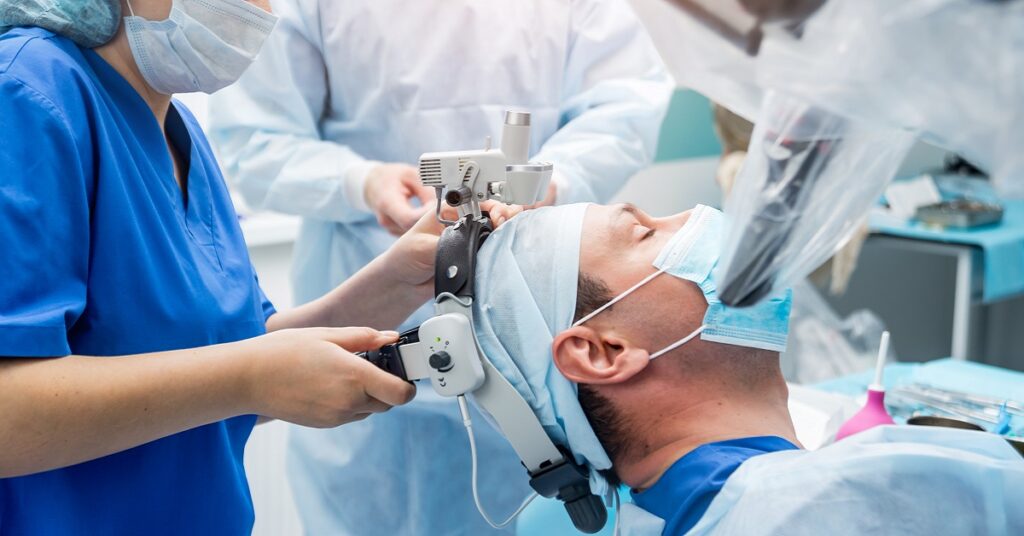
Laser surgeries for head and neck lesions involve the use of highly focused light beams to precisely remove or treat abnormal tissues in the mouth, throat, larynx, and surrounding areas. This advanced technique is minimally invasive, offering greater precision, less bleeding, and quicker recovery compared to traditional surgery. It is widely used for benign lesions, early-stage cancers, vascular malformations, and functional disorders affecting the airway or voice.
Laser technology is effective for a wide range of head and neck conditions, including:
Benign Lesions: Polyps, cysts, papillomas, and leukoplakia.
Early-Stage Cancers: Vocal cord cancers and small tumors of the mouth or throat.
Precancerous Lesions: Abnormal patches that may progress to cancer if untreated.
Vascular Lesions: Hemangiomas or abnormal blood vessel growths.
Functional Problems: Vocal cord paralysis or lesions causing hoarseness.
Obstructive Conditions: Airway blockages due to growths or swelling.
A laser produces a concentrated beam of light energy that can cut, vaporize, or coagulate tissue with high precision. Surgeons use specialized scopes and instruments to guide the laser to the affected area. The main advantages of lasers are their ability to target diseased tissue while sparing healthy surrounding structures, reducing trauma and improving outcomes.
Laser treatment is suitable for:
Patients with small or localized head and neck tumors.
Individuals with recurrent vocal cord growths affecting speech.
Those with benign or precancerous lesions requiring safe removal.
Patients seeking minimally invasive treatment with faster recovery.
Individuals with airway narrowing due to lesions or swelling.
Precision: Targets only abnormal tissue with minimal damage to healthy areas.
Reduced Bleeding: Laser energy seals small blood vessels as it works.
Minimally Invasive: Often performed without external incisions.
Faster Recovery: Less post-operative pain and quicker return to daily activities.
Better Functional Outcomes: Preserves speech, swallowing, and airway function.
Versatility: Useful for both benign and malignant conditions.
Laser surgeries are typically performed under general anesthesia, though minor procedures may use local anesthesia. The surgeon accesses the lesion through the mouth or nose using endoscopes, avoiding external scars. The duration depends on the lesion’s size and location. Most patients can return home the same day. Recovery involves minimal discomfort, with instructions to rest the voice, maintain hydration, and avoid irritants like smoking. Regular follow-ups are necessary to monitor healing and detect recurrence.
Laser surgeries for head and neck lesions combine modern technology with minimally invasive care, offering effective results with less pain, scarring, and downtime. By preserving important functions such as speech and swallowing, laser surgery provides patients with safe, reliable, and cosmetically favorable outcomes. It is an excellent option for those seeking advanced treatment for head and neck conditions with faster recovery and long-term benefits.
Laser surgery for head and neck lesions in Jayanagar, Bangalore uses focused laser energy to treat selected abnormal tissues in areas such as the mouth, throat and larynx. Depending on the type and location of the lesion, laser techniques may offer precise tissue treatment with limited damage to surrounding structures. Specialist assessment is essential to determine whether laser treatment is suitable.
Laser surgery uses concentrated light energy to cut, remove, vaporize or treat selected abnormal tissues. In ENT practice, laser techniques may be used for certain lesions affecting the mouth, throat, larynx and airway. The suitability of laser treatment depends on the type, size, location and characteristics of the lesion.
Depending on the clinical situation, laser treatment may be considered for selected benign lesions, vocal cord lesions, papillomas, polyps, some precancerous lesions and certain small or localized tumors. Not every lesion is suitable for laser treatment, so specialist examination and appropriate diagnostic evaluation are important.
Laser surgery can provide precise treatment of selected tissues while limiting trauma to surrounding areas. Depending on the procedure, potential advantages may include reduced bleeding, less tissue damage and recovery benefits. However, the expected benefits vary according to the lesion, procedure and individual patient factors.
Laser techniques may be used for selected vocal cord lesions, depending on their type, size and location. Conditions affecting the vocal cords can have different causes, including benign growths and other lesions. An ENT specialist can examine the vocal cords and determine whether laser treatment or another procedure is appropriate.
No. Laser treatment is appropriate only for selected lesions. Factors such as tumor type, size, location, depth and surrounding tissue involvement influence treatment selection. A specialist evaluation is required to determine whether laser surgery, conventional surgery, observation or another treatment approach is more suitable.