
Snoring becomes a possible ENT concern when it is loud, frequent, or worsening, and especially when it comes with pauses in breathing, choking or gasping during sleep, excessive daytime sleepiness, morning headaches, or difficulty concentrating. Occasional, mild snoring is common and often harmless, but a persistent pattern like this can point to an underlying sleep-related breathing disorder such as obstructive sleep apnea, which is worth having properly evaluated. Because nasal and throat anatomy often play a role in both simple snoring and sleep apnea, appropriate sleep apnea treatment in Jayanagar usually starts with an ENT assessment to understand exactly what’s contributing to the problem.
Is Snoring Always a Sign of an ENT Problem?
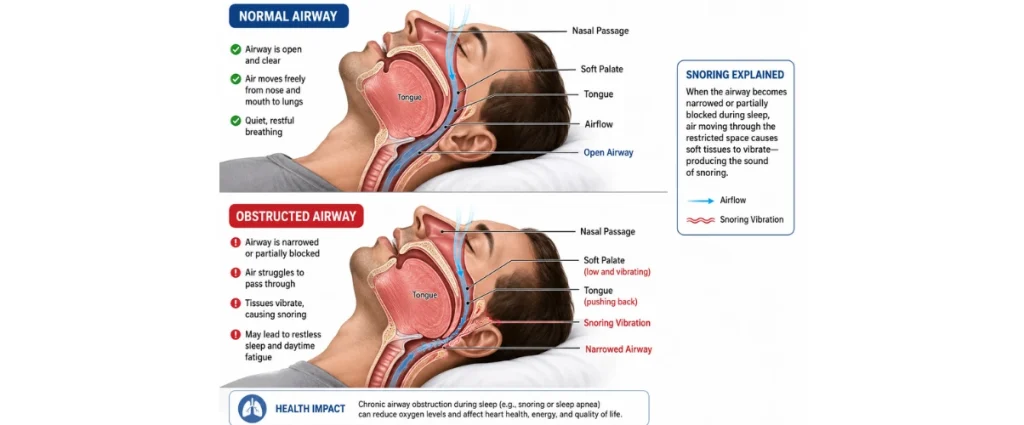
Not always. Snoring happens when airflow through the upper airway becomes partially restricted during sleep, causing the surrounding soft tissues — the soft palate, throat walls, and sometimes the tongue base — to vibrate as air passes over them. Occasional, quiet snoring related to sleep position, tiredness, or minor congestion isn’t necessarily an ENT condition.
That said, several ENT-related factors can directly contribute to persistent or loud snoring, including nasal blockage, a deviated nasal septum, enlarged turbinates, allergic rhinitis, chronic sinus problems, enlarged tonsils or adenoids, nasal polyps, a naturally narrow upper airway, and soft palate or uvula-related obstruction. When snoring is loud, frequent, or associated with other symptoms, it can also be linked to obstructive sleep apnea, which requires proper medical evaluation rather than being dismissed as “just snoring.”
What Is Snoring?
During sleep, the muscles of the throat and soft palate naturally relax. In most people, this relaxation doesn’t meaningfully affect breathing. But when the airway is narrower than usual — due to anatomy, congestion, or tissue bulk — airflow through this narrowed space causes surrounding tissue to vibrate, producing the sound we recognise as snoring.
Occasional snoring can happen to almost anyone, particularly after alcohol, when overly tired, or during a cold. However, persistent or consistently loud snoring shouldn’t automatically be dismissed, since it can sometimes signal ongoing airway narrowing that’s worth identifying and addressing.
What Is Obstructive Sleep Apnea?
Obstructive sleep apnea is a sleep-related breathing disorder in which the upper airway becomes repeatedly narrowed or blocked during sleep, causing temporary pauses or significant reductions in breathing. Each of these episodes can briefly lower blood oxygen levels and cause a short arousal from deep sleep — often so brief that the person has no memory of waking up, even though it disrupts the overall quality of their sleep.
Over time, these repeated interruptions can affect how rested a person feels and may impact overall health and daytime functioning, though the degree of impact varies significantly between individuals. It’s important not to overstate the risks associated with every case — severity ranges widely, and not everyone with sleep apnea experiences the same symptoms or consequences.
What Are the Common Loud Snoring Causes?
Several factors can contribute to loud snoring causes, including:
- Nasal congestion, whether from a cold or ongoing condition
- Allergies affecting the nasal passages
- A deviated nasal septum
- Enlarged tonsils
- Enlarged adenoids
- Nasal polyps
- Chronic sinus problems
- Alcohol or sedative use before bedtime
- Sleeping on the back, which can allow the tongue and soft tissues to fall backward
- Excess body weight, which can narrow the airway
- Naturally relaxed throat muscles
- Anatomical narrowing of the airway
- Age-related changes in muscle tone and tissue
Because so many different factors can contribute, identifying the specific cause for an individual usually requires an examination rather than assuming a single explanation applies.
What Are the Common Sleep Apnea Symptoms?
Recognising sleep apnea symptoms can help determine when further evaluation is worthwhile. Common signs include:
- Loud, persistent snoring
- Witnessed pauses in breathing during sleep
- Gasping or choking sounds during sleep
- Waking with a dry mouth
- Morning headaches
- Excessive daytime sleepiness
- Difficulty concentrating during the day
- Irritability or mood changes
- Restless sleep
- Frequent nighttime awakenings
- Waking up feeling unrefreshed, even after a full night’s sleep
Many people are genuinely unaware of their own breathing pauses during sleep, which is why observations from a sleeping partner or family member are often valuable in recognising the condition. Symptoms and their severity can vary considerably from person to person.
When Is Snoring an ENT Problem?
Nasal Problems
When the nose is chronically blocked — due to a deviated nasal septum, enlarged turbinates, allergic rhinitis, nasal polyps, or chronic sinus disease — breathing through the nose becomes harder. This often pushes people toward mouth breathing during sleep, which can worsen snoring by allowing more airflow turbulence and vibration in the throat.
Throat and Tonsil Problems
Enlarged tonsils, enlarged adenoids, excess soft palate tissue, or other anatomical variations in the throat can physically narrow the airway, making vibration and obstruction more likely during sleep. These structural factors are often identifiable on a straightforward ENT examination.
Mouth Breathing
Chronic nasal obstruction and habitual mouth breathing tend to go hand in hand with snoring, since breathing through the mouth changes airflow patterns and can increase vibration of the throat tissues. Addressing the underlying nasal obstruction can, in some cases, reduce this contributing factor.
Snoring and Sleep Apnea: What Is the Difference?
| Feature | Snoring | Sleep Apnea |
| Main issue | Vibration of upper airway tissues | Repeated airway obstruction or reduced breathing |
| Breathing pauses | Usually absent | May occur |
| Gasping/choking | Not typical | Can occur |
| Daytime sleepiness | May or may not occur | Common |
| Medical evaluation | Depends on severity | Important when symptoms suggest apnea |
Not every person who snores has sleep apnea, and not every person with sleep apnea snores loudly or in an obviously noticeable pattern — this is exactly why symptoms need to be assessed together rather than relying on snoring alone as a diagnostic sign.
How Is Sleep Apnea Diagnosed?
Diagnosis generally involves several components rather than a single test:
- A detailed medical and sleep history, including symptoms noticed by the patient or a sleeping partner
- ENT examination of the nose, throat, and airway
- Assessment of nasal and throat anatomy for contributing structural factors
- Review of associated symptoms, such as daytime sleepiness or morning headaches
- A sleep study (polysomnography) when clinically indicated
- Home sleep apnea testing in selected patients, depending on suitability
An ENT specialist can identify anatomical contributors to airway narrowing during examination, but an ENT exam alone cannot diagnose every case of sleep apnea — a sleep study is often needed to confirm the diagnosis and determine its severity.
What Is the Treatment for Snoring and Sleep Apnea?
Treatment depends on the underlying cause and severity, and there’s rarely a single universal solution.
Lifestyle and Sleep Habits
- Maintaining a healthy weight where appropriate
- Regular physical activity
- Avoiding alcohol close to bedtime
- Reviewing sedative medications with a doctor when relevant
- Sleeping on the side if specifically advised
- Maintaining consistent, good sleep habits
Treating Nasal or ENT Problems
Depending on the identified cause, treatment may include:
- Management of allergic rhinitis
- Treatment of nasal inflammation
- Appropriate treatment for underlying sinus disease
- Nasal medications when medically indicated
- Treatment of structural nasal obstruction, such as a deviated septum, where relevant
CPAP Therapy
Continuous positive airway pressure (CPAP) is a commonly used and well-established treatment for obstructive sleep apnea. It works by keeping the airway open with gentle air pressure delivered through a mask during sleep, and it may be recommended depending on the diagnosis and severity of the condition.
Oral Appliances
Selected patients may benefit from oral appliance therapy, which helps reposition the jaw or tongue to keep the airway more open during sleep. This option is generally considered after appropriate evaluation confirms it’s a suitable fit.
Surgery
Surgery may be considered for selected patients when a specific anatomical obstruction — such as a badly deviated septum, significantly enlarged tonsils, or nasal polyps — meaningfully contributes to snoring or sleep apnea, or when other treatments haven’t been effective or suitable. Snoring surgery in Jayanagar, like elsewhere, is not a default recommendation; it’s considered only after a thorough evaluation shows it’s likely to address the specific problem identified.
When Should You See an ENT Specialist for Snoring?
Consider consulting an ENT specialist for snoring if you notice:
- Snoring that is loud and frequent
- Snoring that appears to be affecting your sleep quality
- Someone has noticed pauses in your breathing during sleep
- Gasping or choking sounds during sleep
- Persistent nasal blockage
- Regular mouth breathing, especially at night
- Excessive daytime sleepiness
- Repeated morning headaches
- Snoring that has become progressively louder or more frequent
- Previous attempts at managing snoring that haven’t helped
An ENT evaluation can help identify whether structural or nasal/throat factors are contributing to the problem, which in turn guides which treatment approach is most likely to help.
When Is Sleep Apnea Treatment Needed?
Whether someone in Bengaluru is looking into sleep apnea treatment Bangalore-wide or specifically in their own neighbourhood, the decision to treat should be based on proper diagnosis rather than snoring alone. A few important points to keep in mind:
- Not everyone who snores has sleep apnea.
- Not everyone with sleep apnea snores in an obviously loud or noticeable way.
- Treatment decisions depend on severity, associated symptoms, overall health factors, and the specific underlying cause.
- A sleep study may be recommended when sleep apnea is genuinely suspected based on symptoms.
- Treatment should be individualized rather than following a one-size-fits-all protocol.
Sleep Apnea Treatment in Jayanagar: When Should You Seek Specialist Care?
For residents of Jayanagar and the wider Bengaluru area, persistent snoring or symptoms suggestive of sleep apnea are worth having assessed locally rather than left unaddressed. Dr. Rohit Udaya Prasad, at Dr Rohit’s Centre for ENT & Cochlear Implant in 7th Block, Jayanagar, Bengaluru, Karnataka, provides ENT evaluation that can help identify nasal and throat factors contributing to snoring and sleep-disordered breathing.
An ENT assessment doesn’t replace a sleep study when one is needed, but it plays an important role in identifying anatomical contributors — such as nasal obstruction or enlarged tonsils — that may be addressed as part of an overall treatment plan. No single clinic or approach can be assumed to be “the best” purely based on location; the right plan depends on individual evaluation findings.
Conclusion
Occasional, mild snoring is common and generally harmless, but persistent, loud snoring can indicate underlying narrowing or obstruction in the upper airway. When snoring occurs alongside breathing pauses, gasping, excessive daytime sleepiness, or morning headaches, it may warrant evaluation for obstructive sleep apnea rather than being treated as a minor nuisance. An ENT evaluation can help identify nasal, throat, and structural contributors, and proper diagnosis — rather than assumptions based on snoring alone — should guide the treatment approach that follows.
If persistent snoring, suspected sleep apnea, or ongoing nasal obstruction is affecting your sleep or daily life, consider scheduling a consultation for sleep apnea treatment in Jayanagar with Dr. Rohit Udaya Prasad at Dr Rohit’s Centre for ENT & Cochlear Implant in 7th Block, Jayanagar, Bengaluru. A proper evaluation can help clarify what’s contributing to your symptoms and what treatment approach may be appropriate for your specific situation.
Frequently Asked Questions
- Why do I snore loudly every night?
Loud nightly snoring often results from narrowed airflow through the nose or throat, caused by factors like nasal congestion, a deviated septum, enlarged tonsils, or excess throat tissue. Persistent loud snoring is worth having evaluated by an ENT specialist to identify the specific cause. - When is snoring a sign of sleep apnea?
Snoring may signal sleep apnea when it’s accompanied by witnessed breathing pauses, gasping or choking during sleep, excessive daytime sleepiness, or morning headaches. These combined symptoms suggest a sleep study and ENT evaluation may be worthwhile. - What are the most common sleep apnea symptoms?
Common sleep apnea symptoms include loud snoring, breathing pauses noticed by others, gasping during sleep, morning headaches, excessive daytime sleepiness, and waking up feeling unrefreshed. Symptoms vary between individuals, so evaluation is needed to confirm the diagnosis. - Can an ENT doctor help with snoring?
Yes, an ENT doctor can examine the nose and throat for structural or anatomical factors contributing to snoring, such as a deviated septum, enlarged tonsils, or nasal blockage. Addressing these underlying issues can sometimes reduce or resolve snoring. - What causes loud snoring at night?
Common loud snoring causes include nasal congestion, allergies, a deviated septum, enlarged tonsils or adenoids, alcohol use before bed, sleeping on the back, and excess body weight. Identifying the specific cause usually requires an ENT examination. - Can a blocked nose cause snoring?
Yes, a chronically blocked nose — from a deviated septum, allergies, or sinus issues — often leads to mouth breathing during sleep, which can worsen snoring. Treating the underlying nasal obstruction may help reduce snoring in some cases. - Does everyone who snores have obstructive sleep apnea?
No. Many people snore without having obstructive sleep apnea, and mild, occasional snoring is often harmless. Sleep apnea is specifically associated with breathing pauses, gasping, and daytime symptoms, which require separate evaluation to confirm. - What treatments are available for sleep apnea?
Treatment options include lifestyle changes, treatment of underlying nasal or ENT problems, CPAP therapy, oral appliances, and surgery in selected cases. The appropriate option depends on the severity and underlying cause identified during evaluation. - When should I see an ENT specialist for snoring?
Consult an ENT specialist for snoring if it is loud, frequent, worsening, or accompanied by breathing pauses, gasping, nasal blockage, or excessive daytime sleepiness. Evaluation helps identify whether a structural or medical cause is contributing. - Can snoring be treated without surgery?
Yes, many cases of snoring improve with lifestyle changes, treatment of nasal congestion or allergies, positional adjustments, or CPAP therapy when sleep apnea is present. Surgery is considered only for selected patients after thorough evaluation.